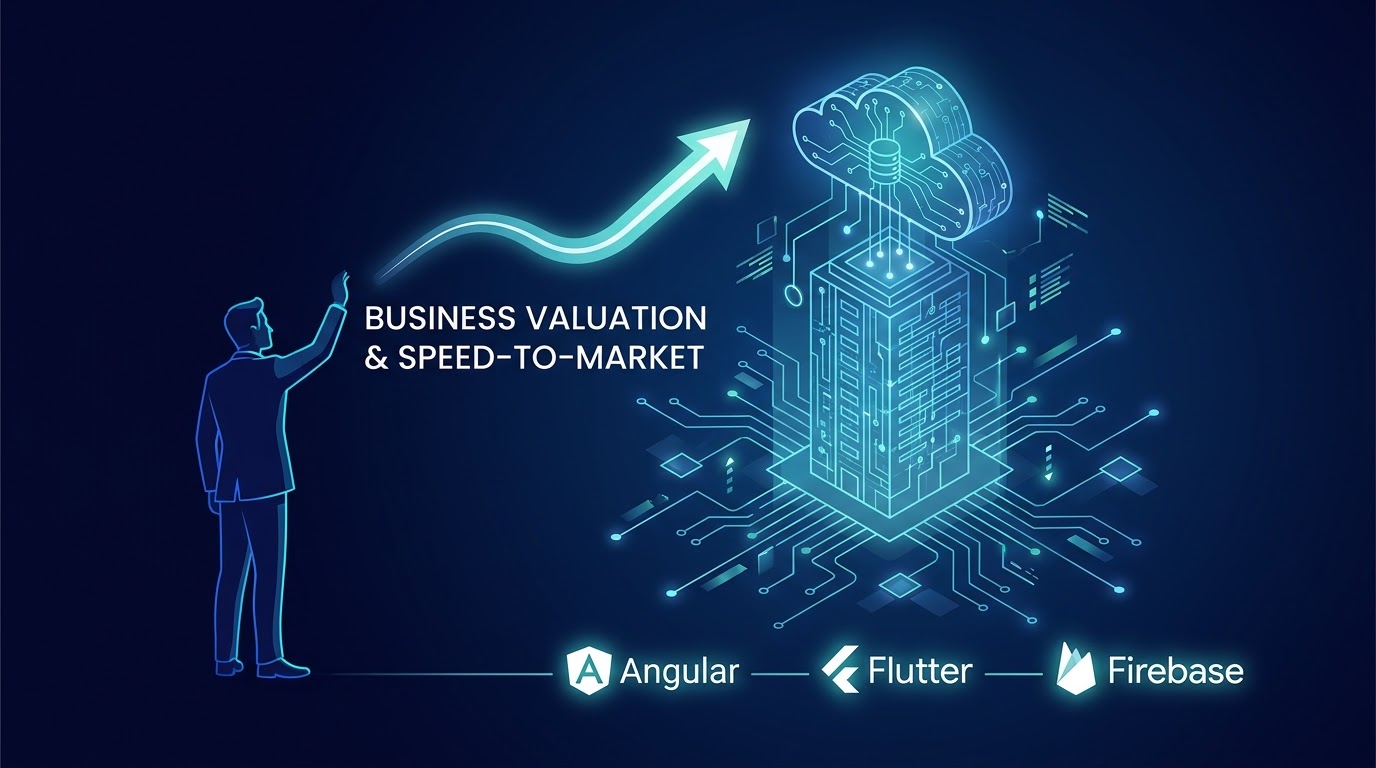
Architecture as a Product Strategy: Why bad code kills startups faster than bad marketing.
When non-technical founders think about launching a digital product, their primary focus is usually on design, user acquisition, and marketing. Technical choices are often treated as an afterthought—something to "figure out later."
This is how technical debt accrues before a product even hits its first 1,000 users.
After 15+ years in product development, I’ve seen this pattern repeatedly: a team rushes a minimum viable product (MVP) to market using quick, unscalable templates. The marketing succeeds, users flood in, and the product promptly crashes, slows down, or fails to release new features because the underlying architecture is a tangled web of legacy patches.
Your architecture choice is not just a technical implementation detail; it is a fundamental product decision.
1. Speed-to-Market vs. Scalability
A common myth in the startup ecosystem is that you must choose between speed and stability.
Using modern cross-platform frameworks like Flutter, you can build a single codebase that runs natively on both iOS and Android. This doesn't just cut development costs by ~40%; it radically shortens your product iteration cycles. When a user requests a feature, you ship it once, not twice.
2. Eliminating the "Infrastructure Overhead"
Startups often waste precious seed capital managing complex server infrastructure before proving product-market fit. Leveraging cloud-native backends like Firebase allows product teams to focus purely on business logic and user experience. Real-time database synchronization, serverless functions, and scalable authentication work out-of-box, enabling your core team to act like an enterprise-level engineering force.
3. Building for Enterprise Longevity with Angular
For enterprise-grade dashboards, custom ERPs, and data-heavy web applications, choosing Angular provides an unshakeable foundation. Its opinionated structure ensures that as your dev team grows, the codebase remains clean, predictable, and maintainable.
The Consultant's Verdict
Do not treat software engineering as a commodity task where you simply "hire coders." Treat your technical architecture as the backbone of your business valuation. Building a scalable system from Day 1 is always cheaper than rewriting a broken system on Day 100.